
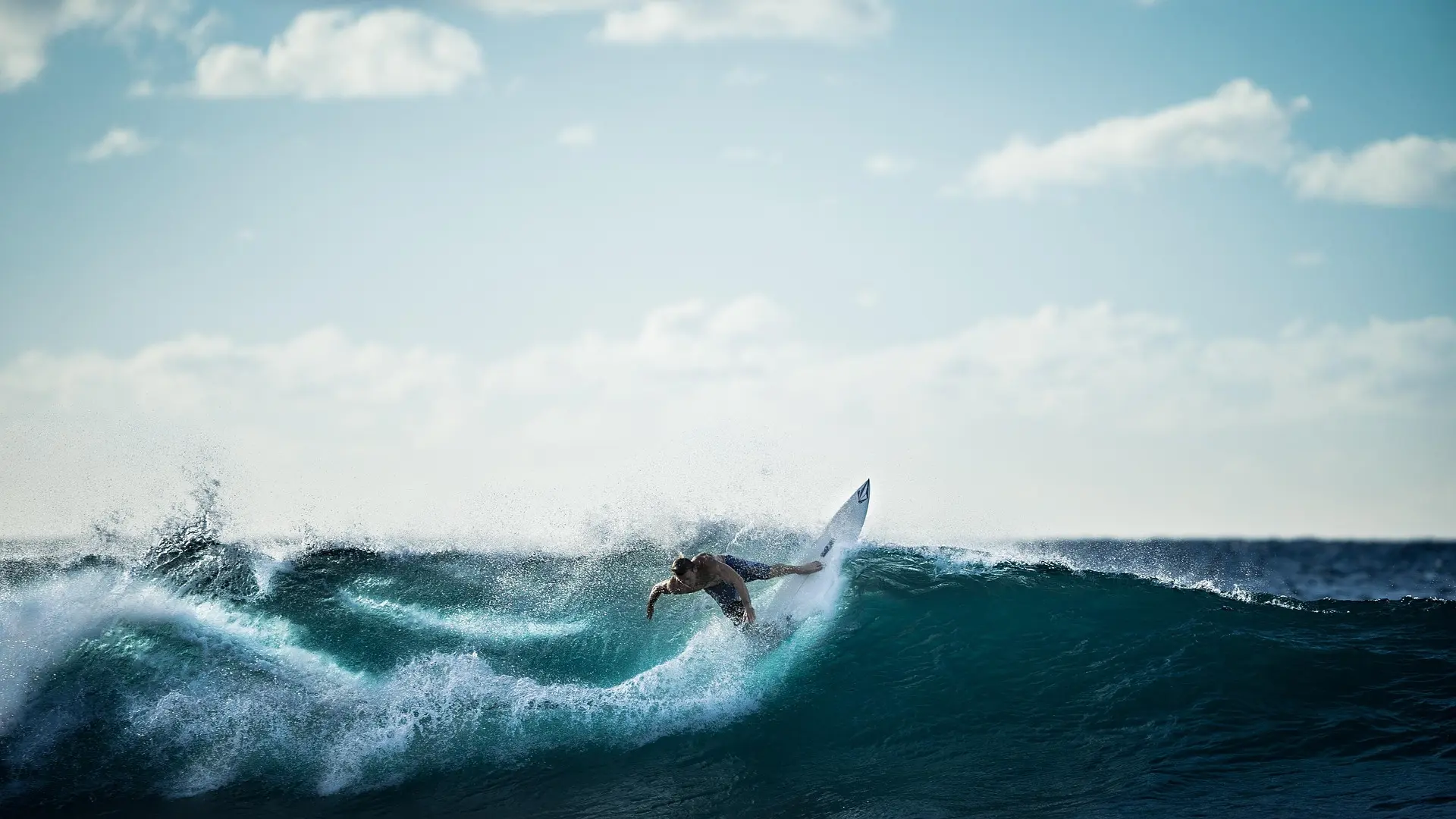
Surf
from €155
Caleta de Famara
Famara is the cradle of surfing in the Canary Islands: four kilometers of golden sand beneath a 600-meter cliff, with waves breaking almost all year round.
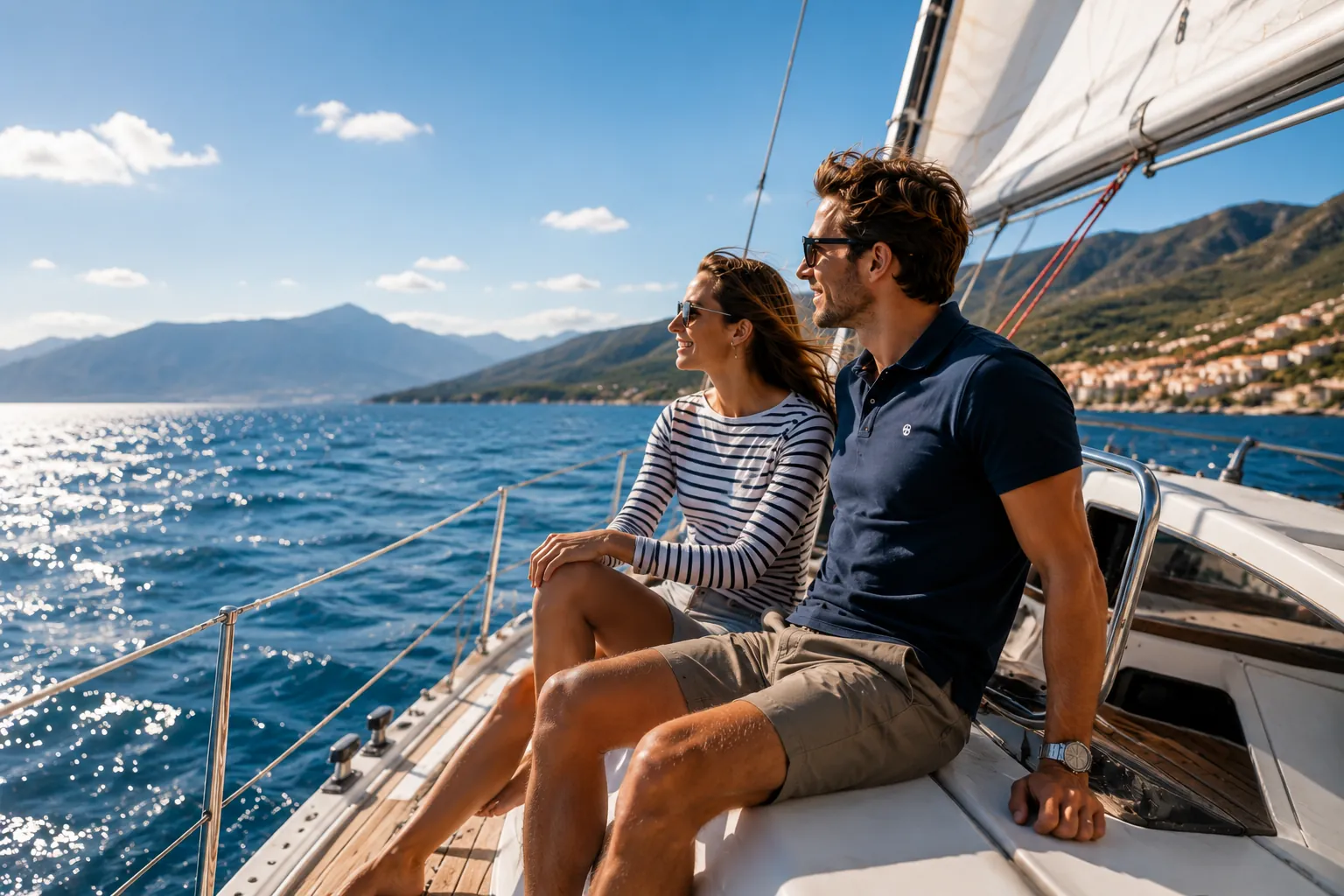
Discover carefully curated experiences for active travelers, families, couples, and nature lovers.
Explore activitiesEditorial guide · Local team in Lanzarote
Some destinations are visited; others are lived. Lanzarote belongs to the latter. In under an hour by car, you can go from a six-hundred-meter cliff overlooking a golden sand beach to a sea of black lava where the ground still holds heat, and from there to a turquoise bay sculpted by trade winds. This concentration of diverse landscapes, across just 845 square kilometers, is what makes the island an exceptional playground for those who travel with a desire to move.
Volcanic origins shape everything. The Timanfaya eruptions, between 1730 and 1736, redrew a quarter of the island, leaving a territory that today can be explored on foot, by electric bike, or from above—and it’s unlike anything else in Europe. Walking through a malpaís, peering into a crater, or cycling among vineyards planted in ash isn’t just a tourist excursion: it’s a lesson in geology and human ingenuity, because every stone wall you see was built by hand to protect a plant from the wind.
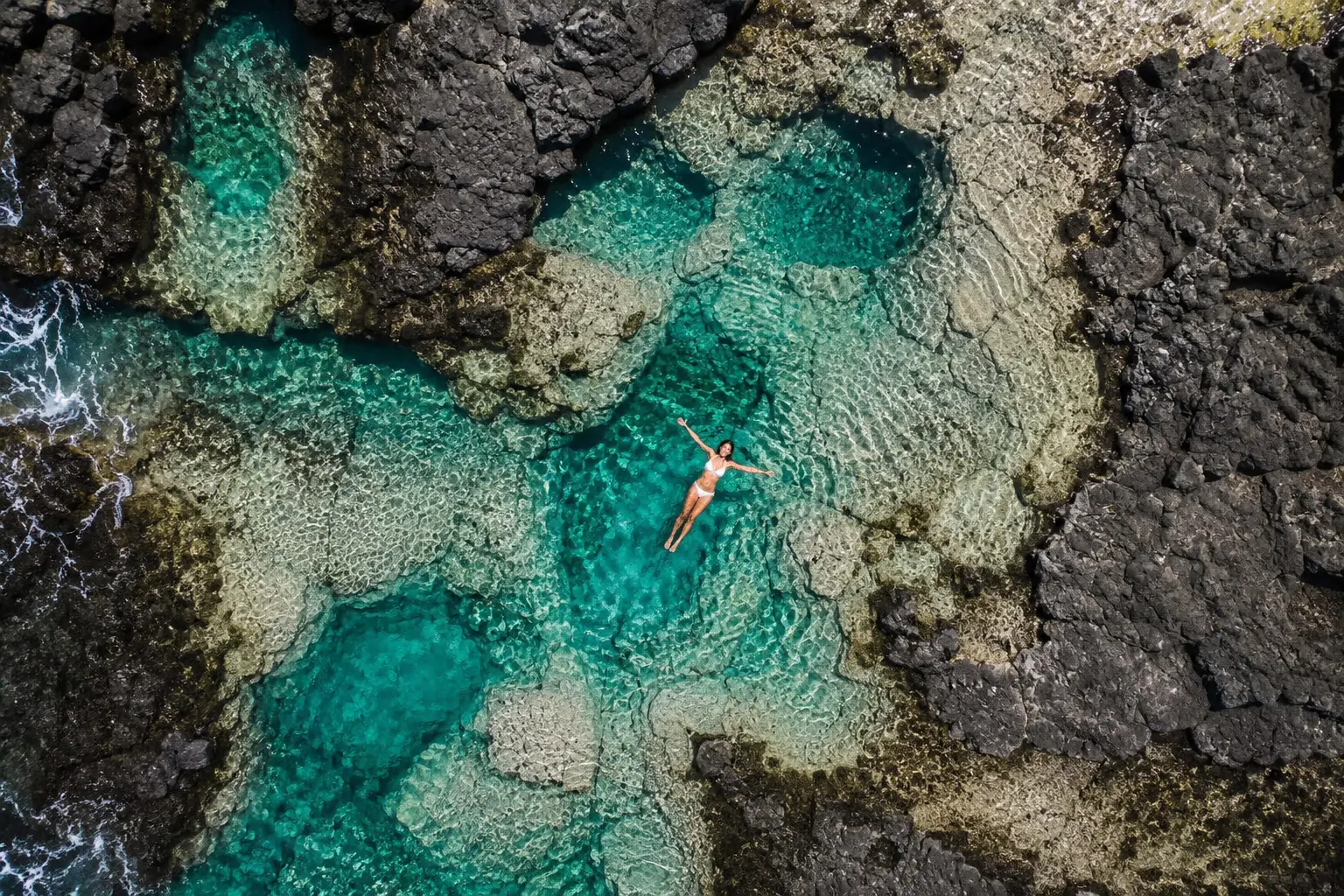
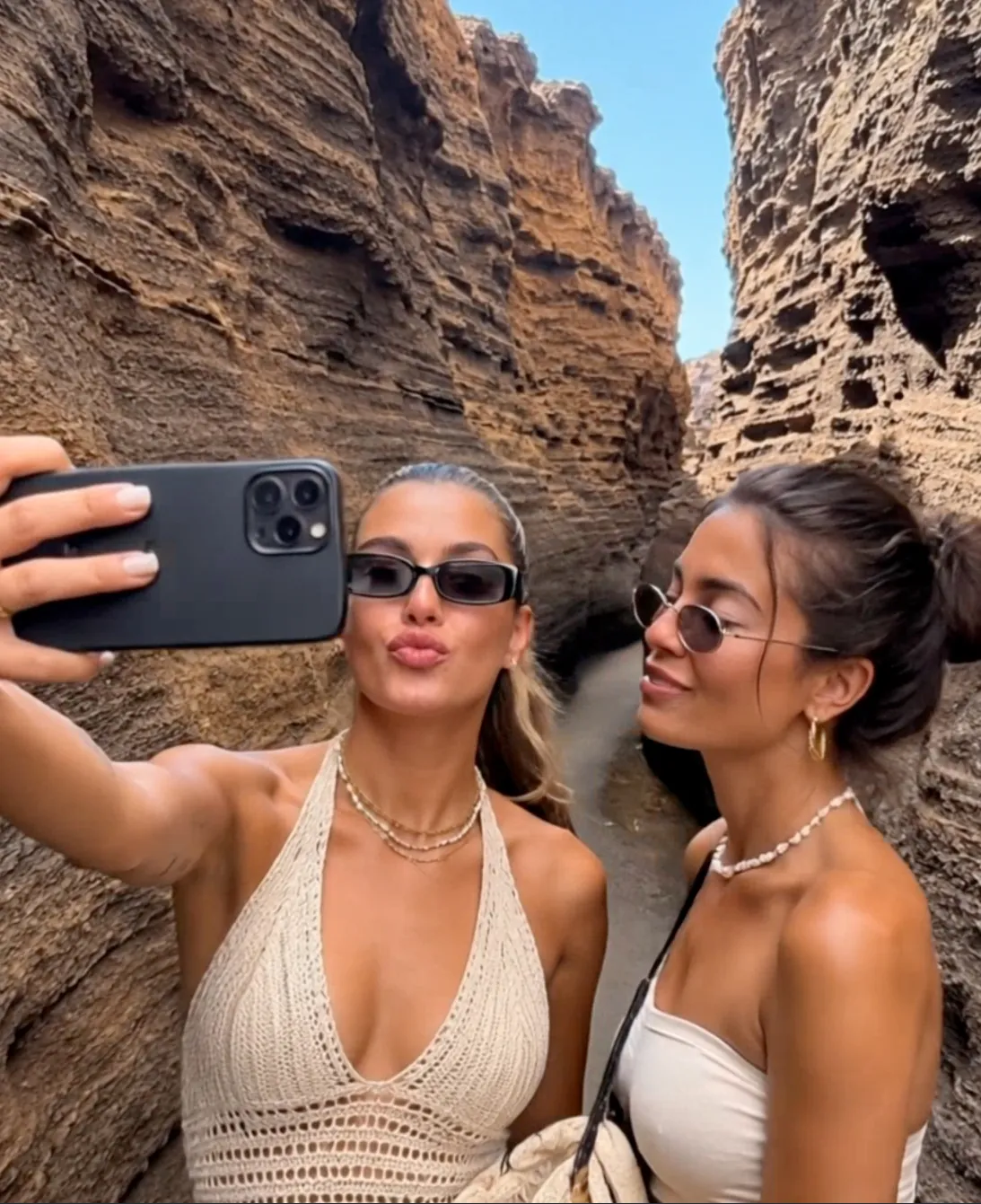
Surrounding it is the Atlantic, and the Atlantic dictates. To the north, Famara receives clean swells for much of the year, having shaped generations of Canarian surfers. To the east, Costa Teguise offers some of the continent's most consistent winds for windsurfing and wing foiling. To the south, the water calms and visibility soars: freediving courses and boat trips find conditions here that only appear in the Mediterranean during summer. Water temperatures range between 18 and 23 degrees Celsius, so the season never truly closes.
Add to that the most cited, yet most underestimated, argument: the climate. Over three hundred days of sunshine a year and an annual average of 21 degrees mean you don't have to plan your trip around the weather. You can surf in January, hike in November, or play tennis in March with the same ease. For athletes, this makes Lanzarote a serious destination: it's no coincidence that the toughest Ironman on the European circuit has been held here for over three decades.
There’s one factor rarely mentioned in guides, but one we value highly: safety and the careful planning behind each activity. The ocean is unforgiving, and the volcanic landscape is more deceptive than it appears. That's why we work exclusively with instructors who live on the island, know every spot in every tidal state, and understand when to change plans. Lanzarote has championed quiet, low-density tourism respectful of the environment for years—it's been a Biosphere Reserve since 1993—and the experiences you'll find in this guide share that same philosophy: small groups, quality equipment, and time to truly enjoy.
Featured categories
Caleta de Famara
Famara is the cradle of surfing in the Canary Islands: four kilometers of golden sand beneath a 600-meter cliff, with waves breaking almost all year round.
Costa Teguise
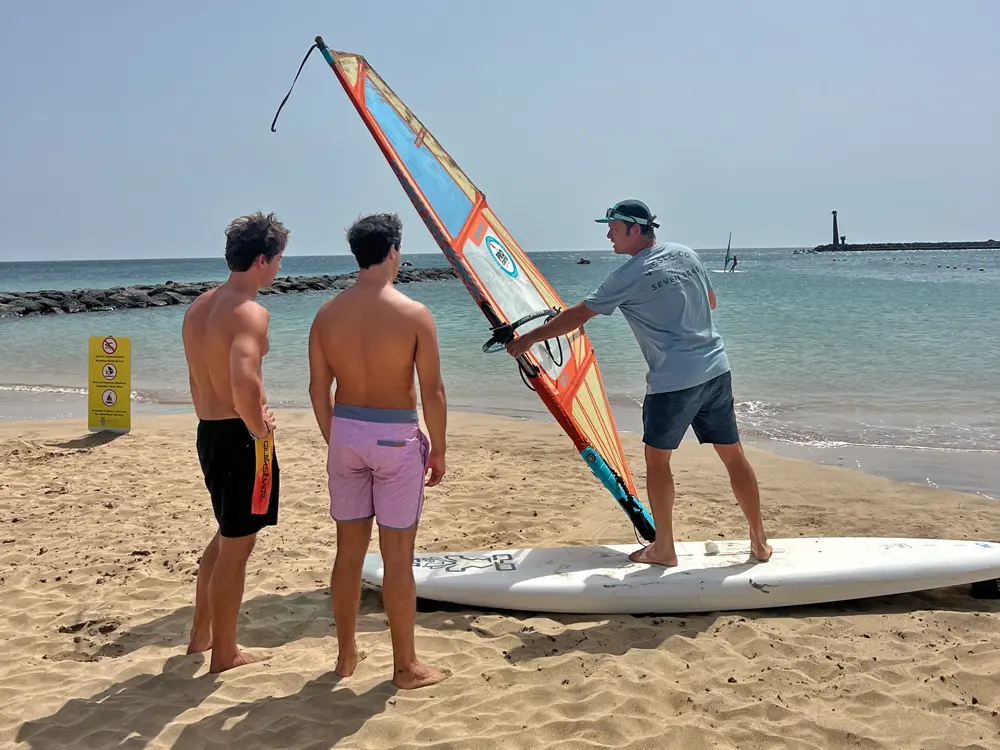
Las Cucharas, in Costa Teguise, is one of Europe's most consistent bays: clean trade winds, turquoise water, and a school with over 30 years of history.
All the island
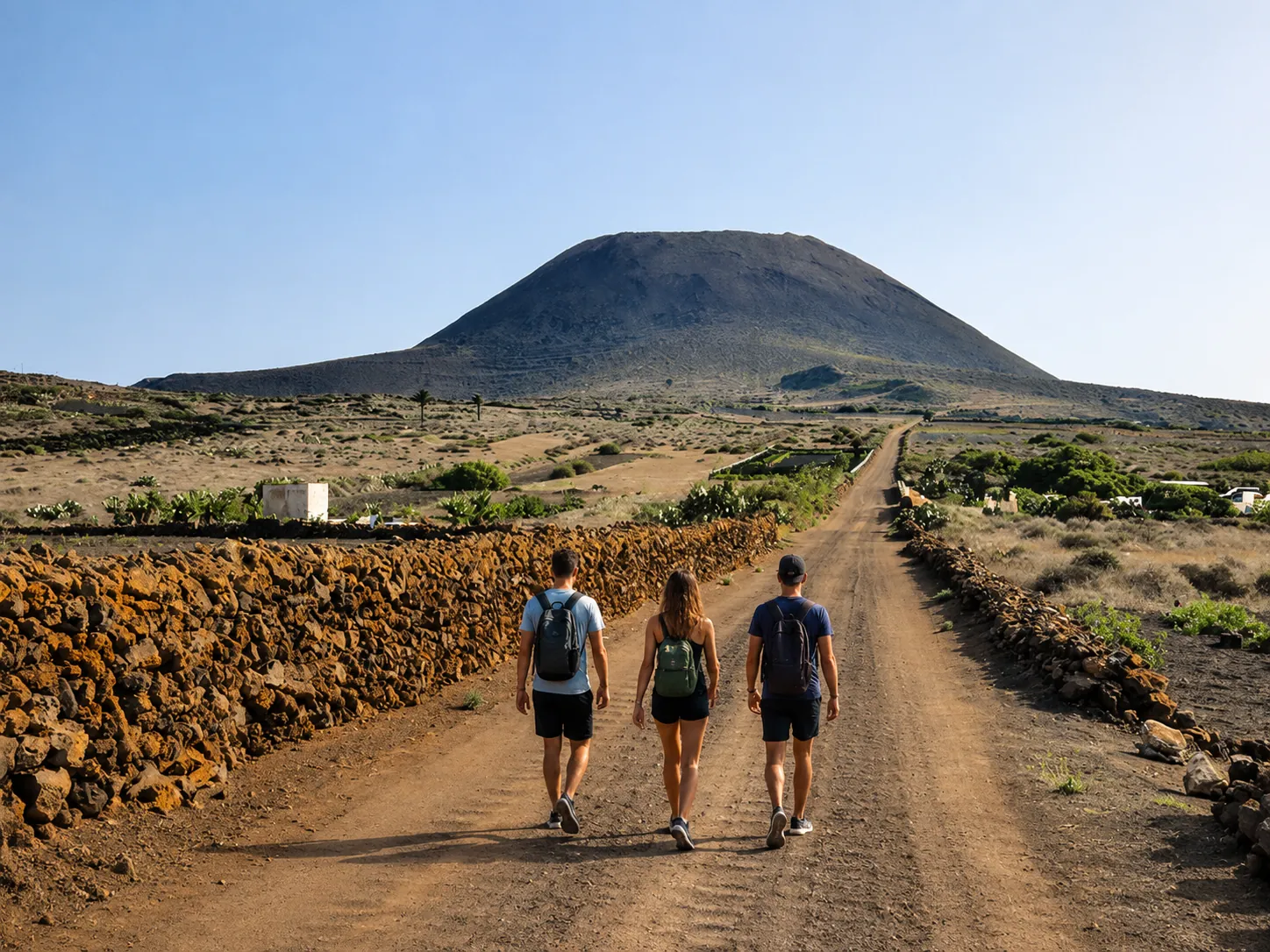
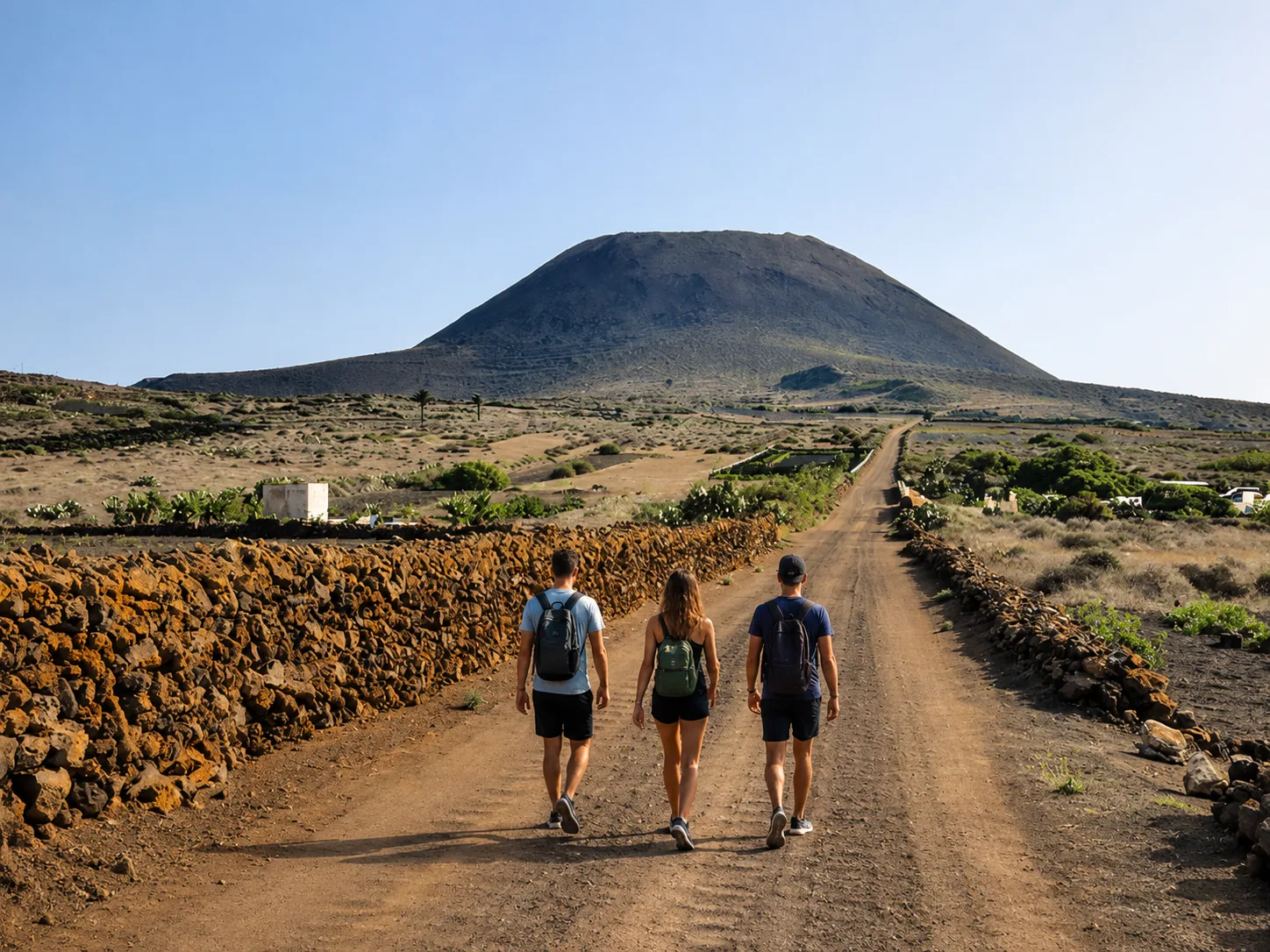
Walk along a dormant volcano, cross a lava field, or gaze out from Risco de Famara with guides who know every stone on the island.
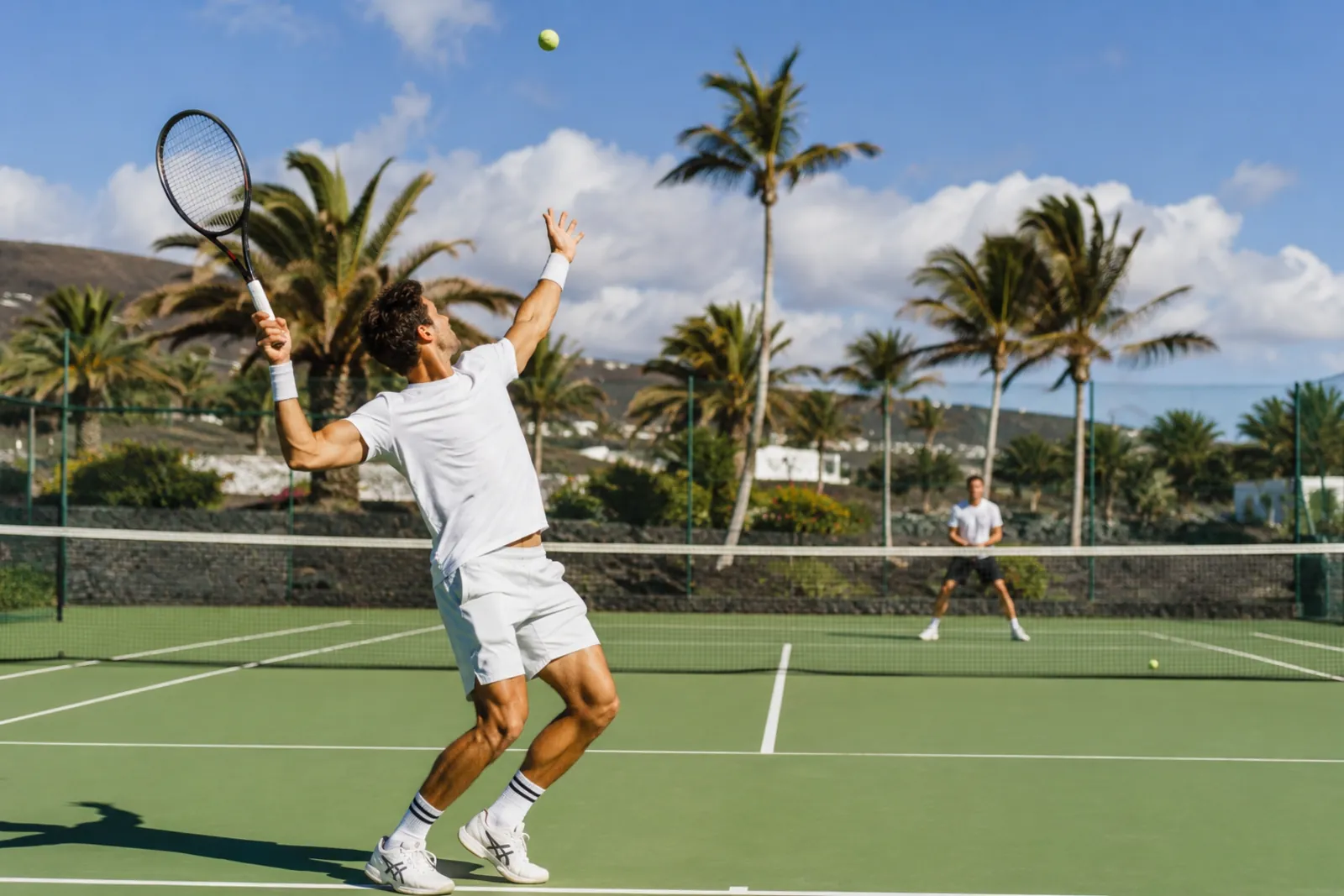
Puerto del Carmen
Seaside carpet courts and renowned coaches: individual, couple, or family lessons during your holidays.
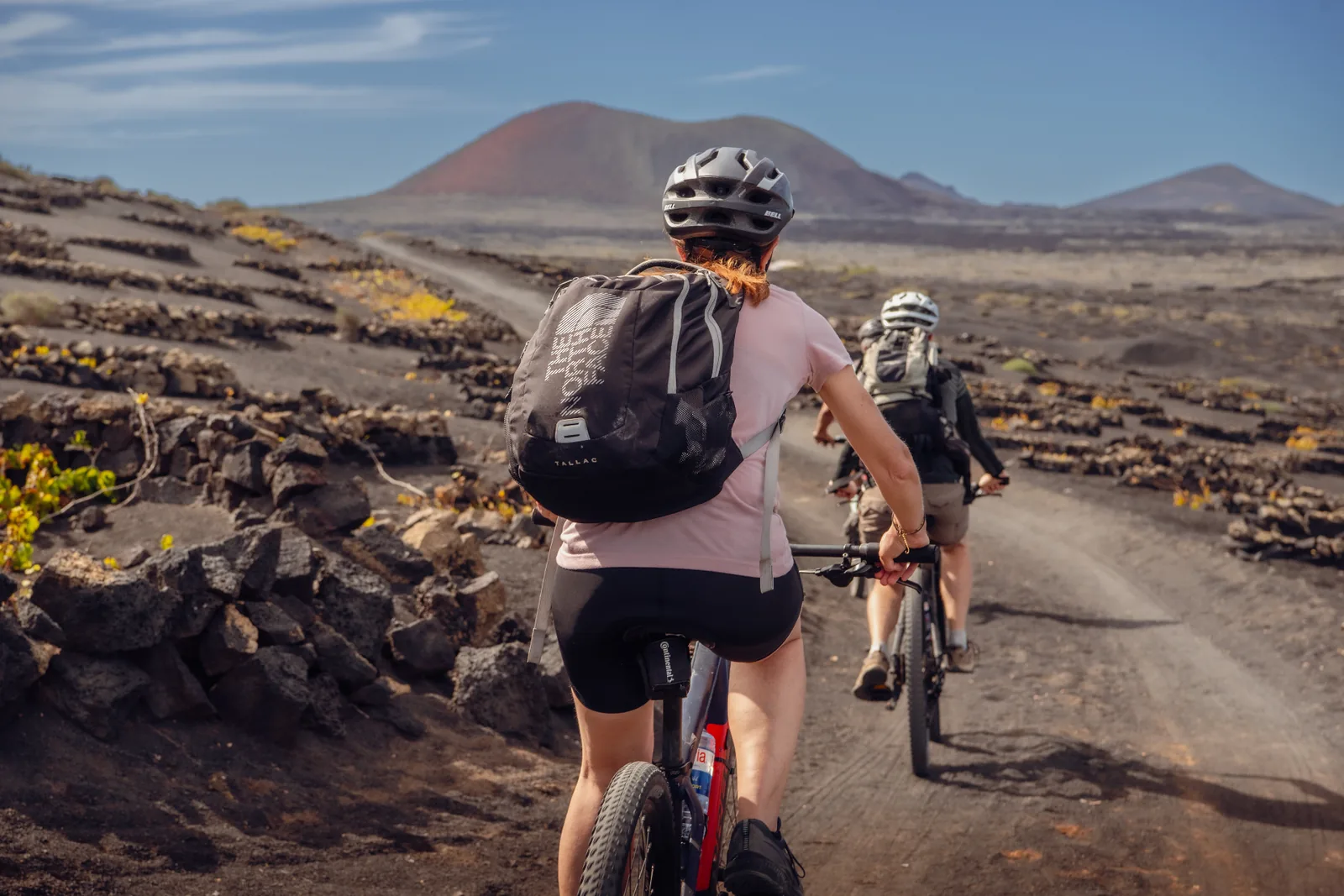
La Geria
La Geria by electric bike: vineyards planted in volcanic ash, craters, white paths, and a stop at a winery for a toast.
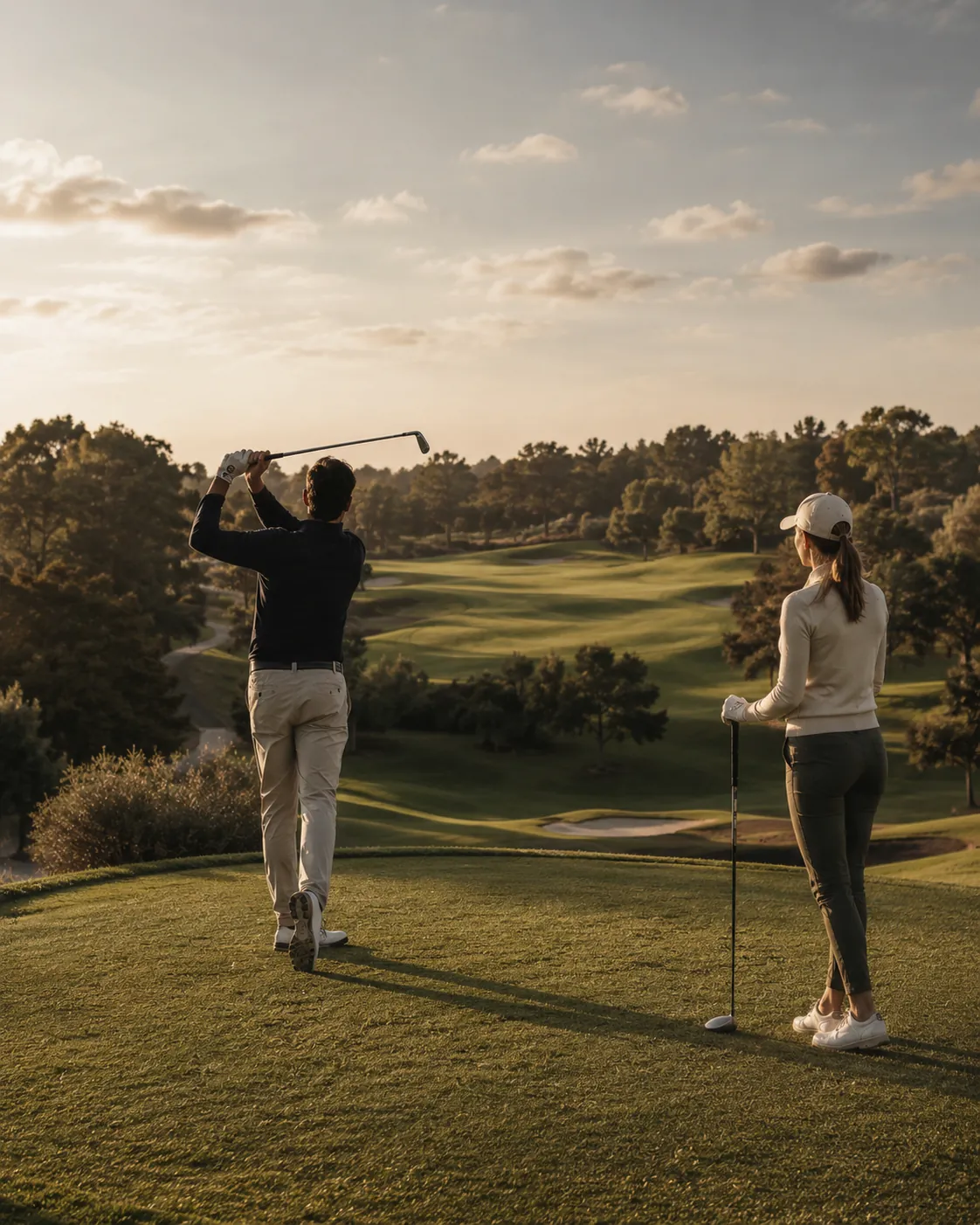
Puerto del Carmen
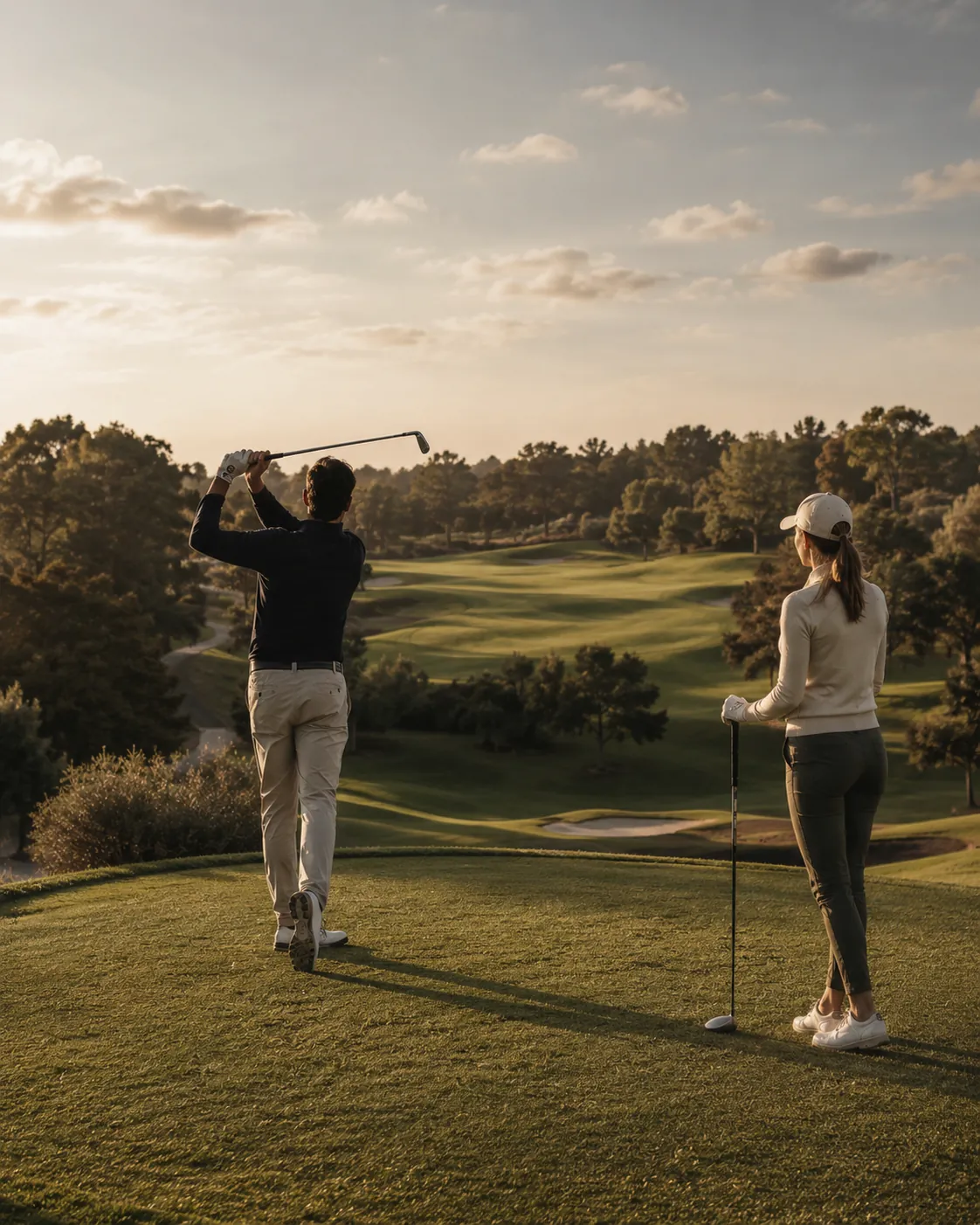
An 18-hole course amidst palm trees and volcanic rock overlooking the Atlantic, with PRO classes to polish your swing on vacation.
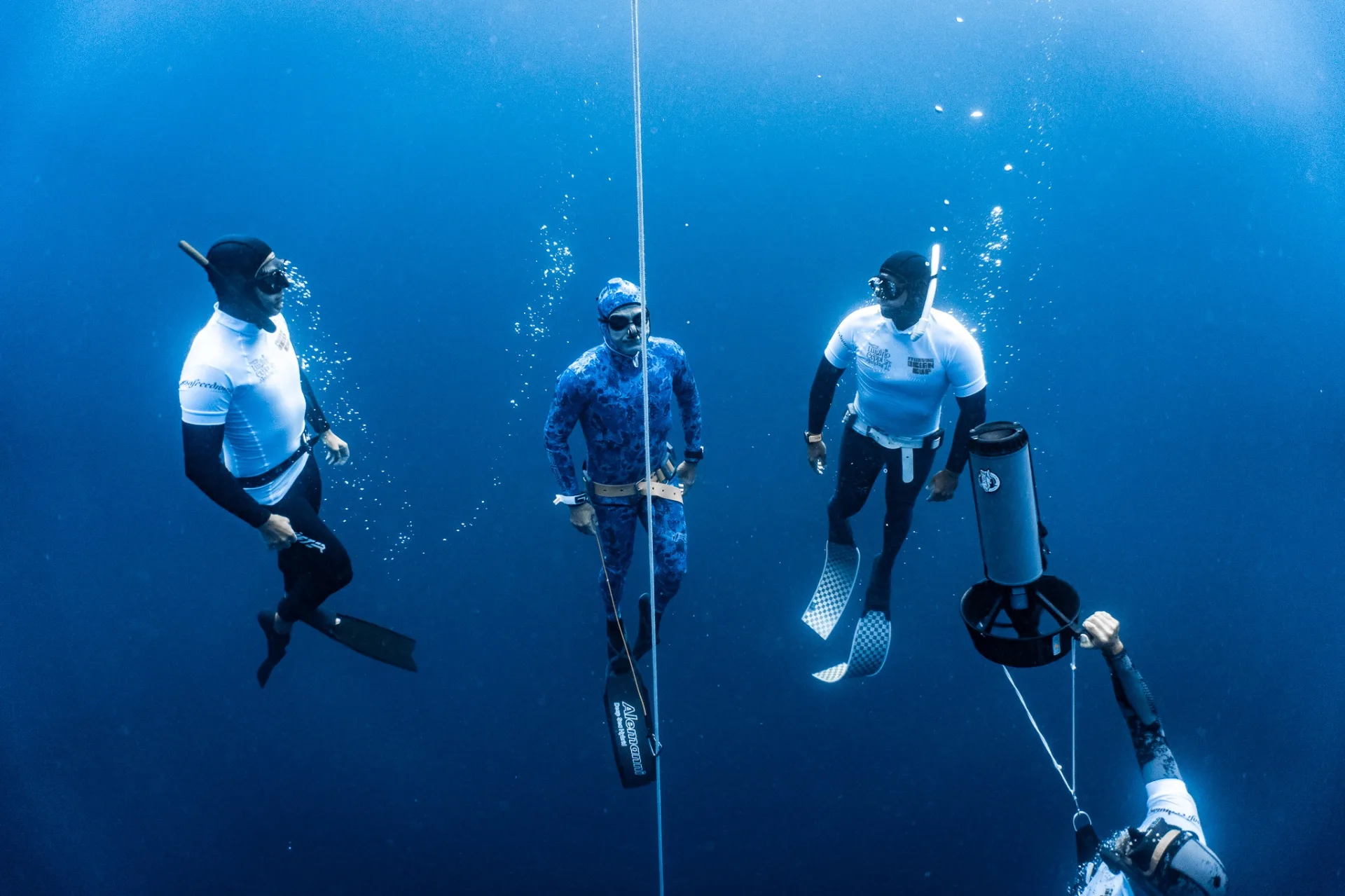
Puerto del Carmen
Freediving in waters with 20 meters of visibility, with official training and a calm that can only be understood once you've experienced it underwater.
Costa Teguise
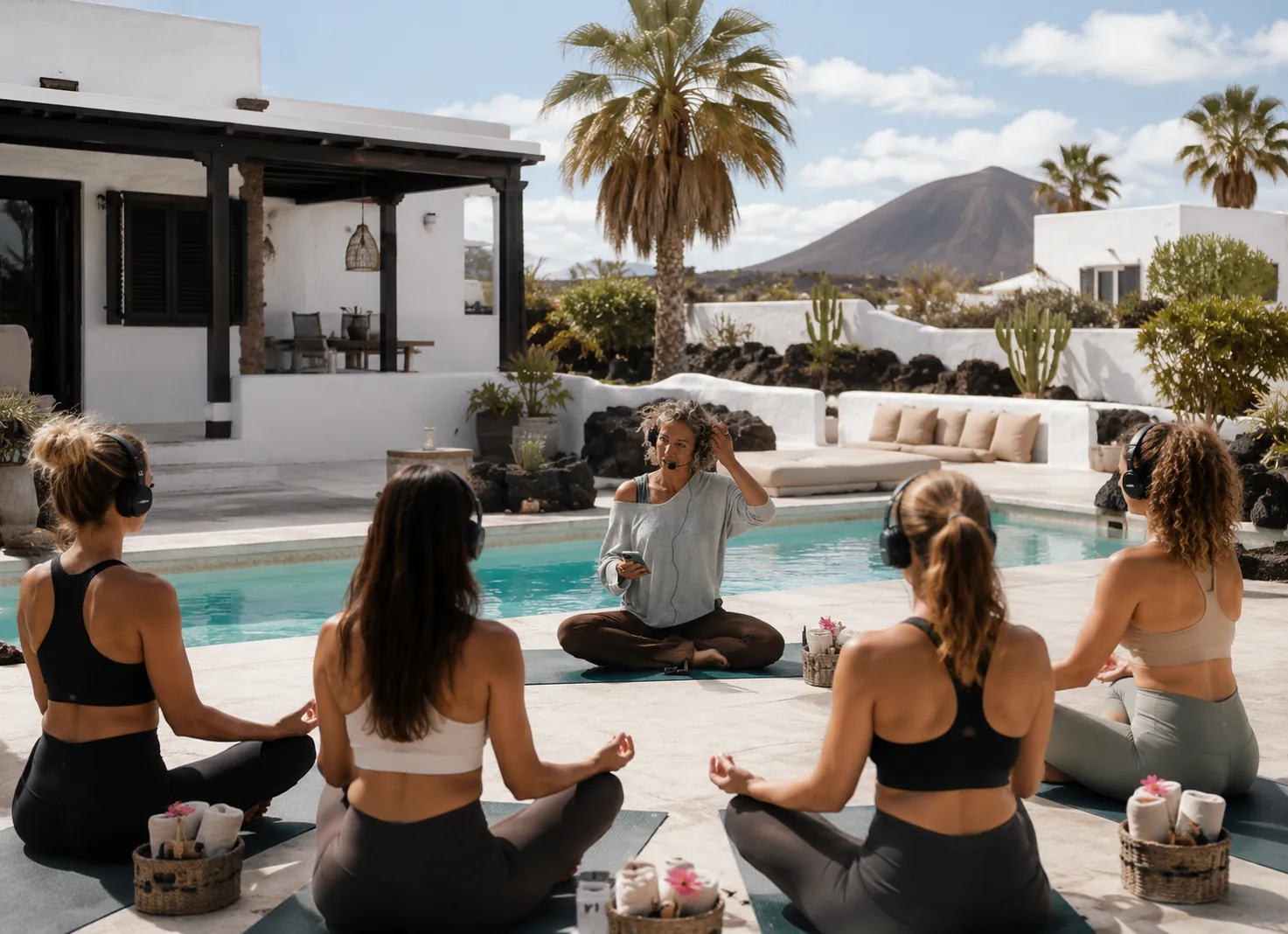
Yoga with wireless headphones facing the ocean: Marta's voice in your ear, and around you, only the silent volcanic landscape.
Why Benty
We are not an excursion search engine. We are a team that lives in Lanzarote and selects, tests, and accompanies every experience we publish.
We test every experience before publishing it. If we wouldn't recommend it to a friend, it doesn't make it onto Benty.
Small ratios and, for many activities, private sessions. Nobody learns to surf in a group of twenty people.
Instructors who live on the island, with names, faces, and years of experience at the spot where they'll take you.
Up-to-date equipment, valid insurance, punctuality, and a friendly approach. The difference is in the details.
Our team helps you choose based on wind, tide, your skill level, and who you're traveling with. No templates.
Final price with IGIC included, WhatsApp confirmation from the local provider, and free cancellation up to 24 hours before.
Featured experiences
Private or small-group tours through Timanfaya, Corona Volcano or Famara Cliff, with a guide who interprets the landscape.
Beginner and advanced classes in Las Cucharas, with equipment included and stable wind from May to September.
An intimate practice with wireless headphones, at dawn, in natural settings not found in any tourist guide.
Certified coaches, carpet courts, and sessions adapted to your level, ideal for active couples and families.
Price from per person. Material, insurance, certified local instructor and IGIC included.
| Activity | Area | Since |
|---|---|---|
| Surf class | Famara | from €155 |
| Windsurf session | Costa Teguise | from €60 |
| Guided hiking | All the island | from €50 |
| eBike tour | La Geria | from €124 |
| Private Tennis Lesson | Puerto del Carmen | from €58 |
| Freediving course | Puerto del Carmen | from €120 |
| Silent Yoga | Costa Teguise | from €25 |
Weather this week
7-day forecast for Lanzarote: temperature, wind, rain, and UV. Choose the best day and book your activity with confidence.
Check the 7-day forecast and discover the three best days for your outdoor adventure on the island.
Explore by interest
Safe, short, and fun activities that will make kids want to repeat them the next day.
Plans with views, time for yourselves and that touch of adventure that makes a trip memorable.
For those who want to return home with stories, not just tourist bus photos.
Train on the island chosen by Ironman: wind, elevation, and clean water all year round.
Private experiences, tailor-made schedules, and providers accustomed to impeccable service.
Recover, breathe and return better than you arrived. Wellness with medical and sports criteria.
The destination
Lanzarote is located at the same latitude as southern Morocco, but the ocean tempers any extremes. The annual average is around 21 degrees Celsius; winter rarely drops below 17, and summer rarely exceeds 29. Rain is brief and infrequent, mostly between November and February. Practically speaking: a trip in January and one in June offer the same sporting possibilities; only the nuances change. In winter, the sea is rougher, and the trails are greener; in summer, the wind is more constant, and evenings stretch until nine. No one has to cancel an active holiday because of the weather.
The entire island is declared a UNESCO Biosphere Reserve, and this decision has shaped its development. There are no skyscrapers, no billboards on the roads, and traditional architecture—white, green, and blue—is maintained by regulation. Much of the credit goes to César Manrique, who turned respect for the landscape into a cultural project. For the active traveler, this translates into something very specific: trails are not overcrowded, natural spaces are protected, and beaches retain their character. Walking through Los Ajaches or the Famara Cliff remains an experience of silence.
Few places offer such a variety of sea in such a small area. The north and west coasts receive the Atlantic swell and sustain the surf scene in Famara, with sandy waves suitable for learning and challenging peaks for the experienced. The sheltered east coast is a wind laboratory: Las Cucharas has been a European windsurfing benchmark for decades and is now also a wing foil hotspot. The south, more sheltered and warmer, is the territory for freediving, snorkeling, and sailing, with visibility often exceeding twenty meters and a unique underwater Atlantic Museum in Europe. And all of this is less than forty minutes apart.
The Timanfaya eruption lasted six years and covered a quarter of the island with lava. The extraordinary thing is that this landscape remains almost intact and accessible: you can climb the Corona Volcano, explore the Caldera Blanca, cross the malpaís of La Corona, or cycle among the hollows of La Geria, where farmers planted vines in the ash and protected them with semicircular walls. It's one of the most unique forms of agriculture in the world and, incidentally, one of the most photogenic electric bike routes out there. The terrain is challenging due to sun and wind, not elevation, so a local guide makes all the difference between a great route and a bad memory.
In Lanzarote, physical activity isn't a tourist product: it's a way of life. At seven in the morning, people are swimming in Playa Chica, cyclists are climbing towards Femés, and yoga groups are on the promenades. This normalcy means infrastructure is good, and professionals are accustomed to working year-round, not just in August. It's also why the island has become a winter training base for European triathletes, cyclists, and swimmers, and why Ironman Lanzarote is renowned as the toughest on the circuit.
Arrecife Airport connects daily with major European cities, just fifteen minutes from Puerto del Carmen and twenty-five from Costa Teguise. Internal distances are minimal: crossing the island from north to south takes little over an hour. This allows for something impossible in larger destinations: surf in Famara in the morning, have lunch in the north, and still make it to a sunset yoga session on the east coast. Many of our experiences also include pick-up or are held directly at your accommodation, so you don't even need to rent a car to enjoy an active trip.
The island relies on a fragile balance: desalinated water, volcanic soil, and natural spaces that cannot tolerate mass tourism. That's why more and more providers work with small groups, durable equipment, and routes that respect marked trails. We apply the same criteria when choosing our partners: we prefer a small school that takes care of its spot over an operator that fills buses. Traveling this way is not only more responsible; it's simply more enjoyable, because you share the landscape with fewer people and learn from someone who truly knows it.
Hiking in Lanzarote
Guided routes through volcanoes and malpaís.
Read more →
Surfing in Lanzarote
Classes in Famara for all levels.
Read more →
Windsurfing in Costa Teguise
Constant trade winds and turquoise waters.
Read more →
Tennis in Puerto del Carmen
Carpet pitches and certified coaches.
Read more →
eBike through La Geria
Volcanic Vineyards by Electric Bike.
Read more →
Golf in Lanzarote
18 holes between lava and palm trees.
Read more →
Freediving and apnea
Official training in crystal clear waters.
Read more →
Medical Fitness
Functional recovery at your accommodation.
Read more →
Silent Yoga
Yoga with headphones facing the ocean.
Read more →
Healthy brunch
Real breakfasts for active travelers.
Read more →
Sport Report
Live wind, wave, tide, and weather.
Read more →
No problem, we'll advise you individually. Write us on WhatsApp and we'll create a free adventure recommendation for you. We speak English, German and Spanish fluently.