
The best surf spots in Lanzarote
Lanzarote is one of Europe's most comprehensive surf destinations: over 30 recognized spots within 60 km of coastline, North Atlantic swells all winter, and surfable waves almost every day of the year. From the golden sands of Famara to the serious reefs of La Santa, there's terrain for all levels — as long as you know how to choose the right spot.
This guide covers Lanzarote's best surf spots, ordered by level and area, with details of each wave, best tide, optimal wind, and dangers. If you're coming to catch waves for the first time, we also tell you where to start and which spots to avoid until you have local experience.
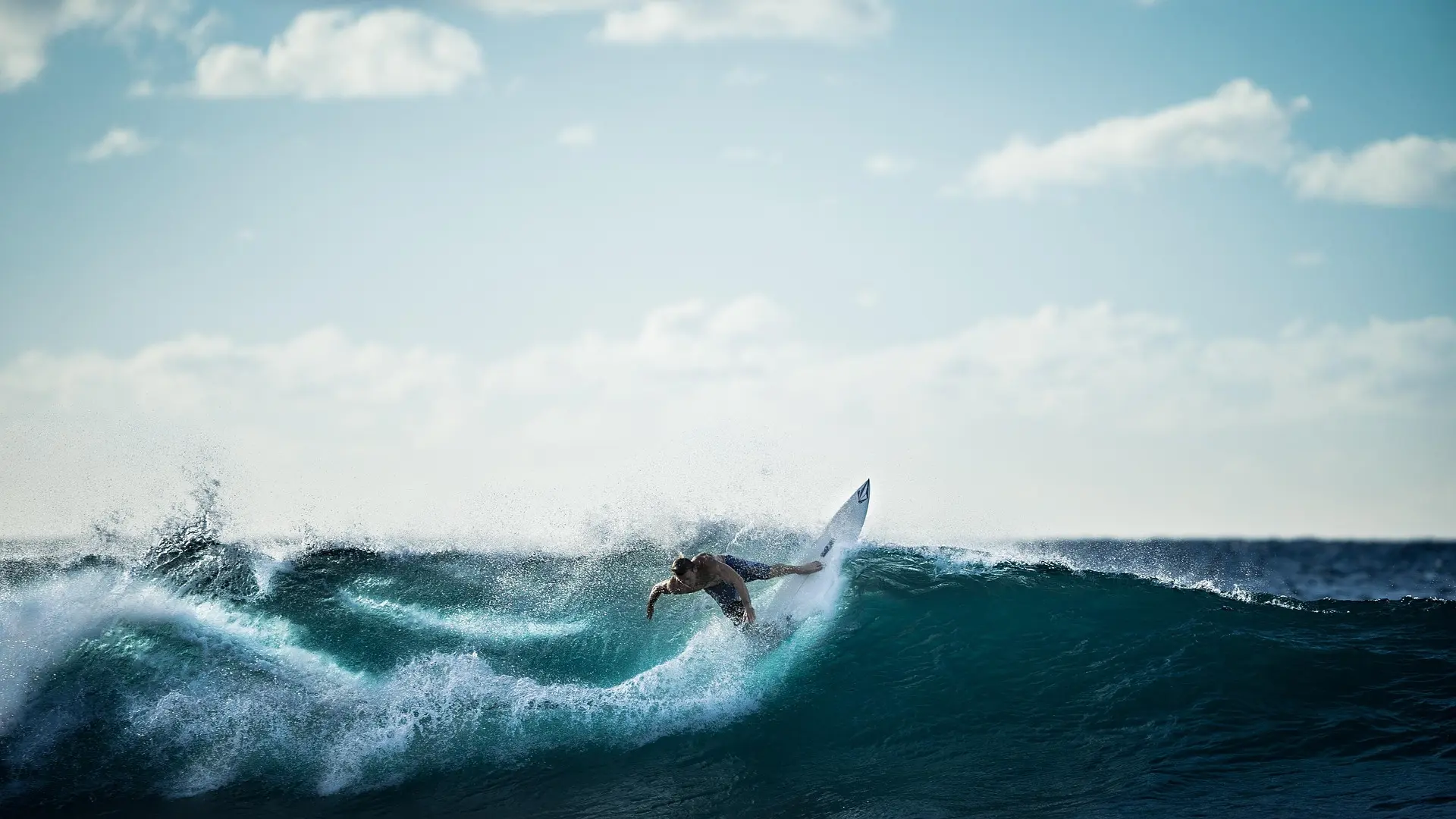
Spots for beginners
Famara (southern and central zone): the quintessential spot for beginners. Sandy bottom, progressively breaking waves, professional schools, and lifeguards. This is where 90% of new surfers in Lanzarote learn.
Caleta Caballo: small beach northwest of Famara, ideal when Famara is saturated or too crowded. Mixed bottom but gentle waves at mid-high tide. Recommended only with a local guide for the first few days.
Playa de las Cucharas (Costa Teguise): Although it's a windsurfing spot, on windless days it offers small, clean waves suitable for practicing take-offs and first maneuvers.
Spots for intermediate surfers
Famara (northern zone): more defined peaks, lefts and rights with a long ride. Requires constant paddling and good positioning. A good spot to transition from soft to hardboard.
San Juan: a long right-hand wave north of Famara, a classic during the Canarian winter. Works with north-northwest swell and mid-tide. There's a current — it's not a spot for your first unassisted session.
Bocabarranco: powerful right-hand wave over sand and rock bottom, right next to Famara. Works on big days — for solid intermediates and advanced surfers.
Spots for advanced surfers
El Quemao (La Santa): the most iconic spot in the Canary Islands and one of the most serious in Europe. A hollow and extremely fast left over a lava reef — only for surfers with real skill and prior experience in reef waves. Best with a west-northwest swell and mid-outgoing tide.
La Santa (Slab): a powerful right-hand wave directly in front of El Quemao. Few surfers ride it — mandatory barrel and serious consequences if you fall.
Morro Negro and Jameos: reef spots in the north of the island, with world-class waves when a large swell arrives. Difficult access, sharp bottom, and always with experienced local surfers.
El Risco: a long left at the foot of the cliff, accessible only on foot or by boat. A huge reward when it's working — but also a logistical effort.
Best time and conditions by area
North Coast (Famara, La Santa, San Juan, Jameos): works mainly with North Atlantic swells from October to March. In summer there are smaller but still surfable waves almost every day. Northeast trade winds — look for mornings or evenings depending on the spot.
South and East Coast (Playa Blanca, occasional Arrieta): works with south or east swells, much less frequent but useful when the north is flat or too big.
Tides: many reef spots only work within a specific tidal range. Before going, check the local tide chart, and if you don't know the spot, always go with someone who does or book a class/guiding with a local school.
Tips for surfing in Lanzarote
Respect the locals and the lineup hierarchy — Lanzarote has a close-knit and active surfing community. Greeting others, giving way on your first session, and not paddling around those with priority are basic etiquette.
Protect the reef: many spots are over sharp lava. Wetsuit boots are recommended in spots like El Quemao, Morro Negro, or Jameos. Always carry a basic first-aid kit.
If in doubt, book a guide or a lesson: local schools know the tides, winds, and actual level of each spot. You'll learn more in one day than in a week of guessing on your own.
Frequently asked questions
- What's the best surf spot in Lanzarote?
- It depends on your level. For beginners, the south and central area of Famara is the absolute best spot. For intermediates, the north area of Famara and San Juan. For advanced surfers, El Quemao (La Santa) is the most legendary spot in the Canary Islands.
- Where can I learn to surf in Lanzarote?
- Famara is the unique answer for 95% of cases: sandy bottom, gentle waves, schools with certified instructors, and lifeguards. Caleta Caballo is an alternative for crowded days.
- When is the best time to surf in Lanzarote?
- October to March for intermediate and advanced surfers (powerful North Atlantic swells). May to September for beginners (smaller, more consistent waves). Lanzarote has waves all year round.
- Is surfing dangerous in Lanzarote?
- The reef spots (El Quemao, Morro Negro, Jameos) are serious and only suitable for surfers with prior experience in reef waves. Famara and Caleta Caballo are sandy spots, much safer. As always, respect your level.
- Do I need a car to surf in Lanzarote?
- Highly recommended. The best spots are on the north coast (Famara, La Santa, San Juan) and require travel from most tourist areas. If you stay in Caleta de Famara, you can walk to most peaks.
- What board should I bring to Lanzarote?
- For beginners: soft top 7'6"-8'6" (provided by schools). For intermediates: evolution board or shortboard 6'0"-6'6". For advanced surfers on reef breaks: sturdy wave shortboard. Almost all schools rent boards by the day or week.
- Are there surf spots near Puerto del Carmen or Playa Blanca?
- Near Puerto del Carmen and Playa Blanca there are occasional waves with south or east swells, but these conditions are infrequent. To surf regularly, it makes sense to drive 30-40 min to Famara/La Santa.
Keep exploring
Surf in Famara: the legendary beach of the Canary Islands
Complete guide to Lanzarote's king surf spot: zones, best time, and schools.
Read more →
Surf for beginners in Lanzarote
Where to learn, how many lessons you need, and what to expect from your first session.
Read more →
Book your surf lesson
VIP classes in small groups with certified instructors and equipment included.
Read more →
Do you want to surf the best spots in Lanzarote?
Book guiding and lessons with local schools selected by Benty. They'll take you to the right spot for your level and the day's conditions.
View surf lessons and guiding